
Spring and Easter bring new energy to Budapest’s rental market, offering fresh opportunities for expats seeking their next home.
, 2026. 04. 20.


Has the Budapest real estate market reached a turning point in spring 2026 – or is a period of waiting ahead?

Spring 2026 has clearly opened a new chapter in the Budapest real estate market. In recent months, a certain slowdown has already been noticeable, while market sentiment is now even more strongly defined by a general wait-and-see approach. Market participants are not only monitoring economic developments, but are also closely watching the direction in which the economic and regulatory environment will move in the coming period.
At Home Budapest Network – with more than 20 years of market experience and a leading position in the expat rental segment – is able to clearly sense this shift through its daily client interactions. Based on trends from the past 1–3 months, it is evident that a portion of buyers and investors are deliberately taking a cautious, wait-and-see approach.
Slowing transactions, strengthening negotiating positions

On the Budapest residential property market, a declining number of transactions has been observed in recent periods, closely linked to a more cautious, wait-and-see buyer behavior. Decision-making has become more time-consuming, particularly in the case of higher-value properties.
In parallel, the dynamics of negotiations have also shifted. Buyers’ bargaining positions have noticeably strengthened, and it has become increasingly common for sellers to adopt a more flexible approach to pricing. The current hesitation is driven not only by economic factors, but also by the fact that market participants are seeking greater clarity on the near-term evolution of the economic environment.
THE RENTAL MARKET: SIGNS OF REBALANCING

The Budapest rental market has long been steadily built on expats arriving through international companies. However, several recent factors have begun to reshape this picture.
The slowdown in the broader European economic environment, combined with more cautious corporate decision-making, has led to a decrease in expat mobility. At the same time, the supply side has been expanding, with an increasing number of newly built, high-quality apartments entering the market, intensifying competition among landlords.
As a result, the market has entered a more balanced phase: while rental prices have stabilized at a high level, the speed of letting and competition for tenants have both increased.
INVESTOR DECISIONS IN A NEW FOCUS

For investors, one of the key questions in the current period is no longer purely yield, but predictability.
The significant property price growth of recent years, the increase in rental rates, and currency effects have together created a situation where returns now require more thorough analysis. In parallel, an increasing number of investors are examining how to diversify their portfolios in a more deliberate and structured way.
INTERNATIONAL DIVERSIFICATION: A NEW STRATEGIC DIRECTION

Interest in international expansion is showing a marked increase. The International Hub service launched by At Home Budapest Network is a direct response to this demand: it enables clients to enter foreign real estate markets through reliable partner networks.
Investor attention is currently directed toward several destinations, particularly markets such as Spain, Vienna, Florida, and Dubai. International diversification is no longer seen solely as a yield-optimization strategy, but increasingly as a conscious approach to risk management.
OUTLOOK: WAITING OR OPPORTUNITY?
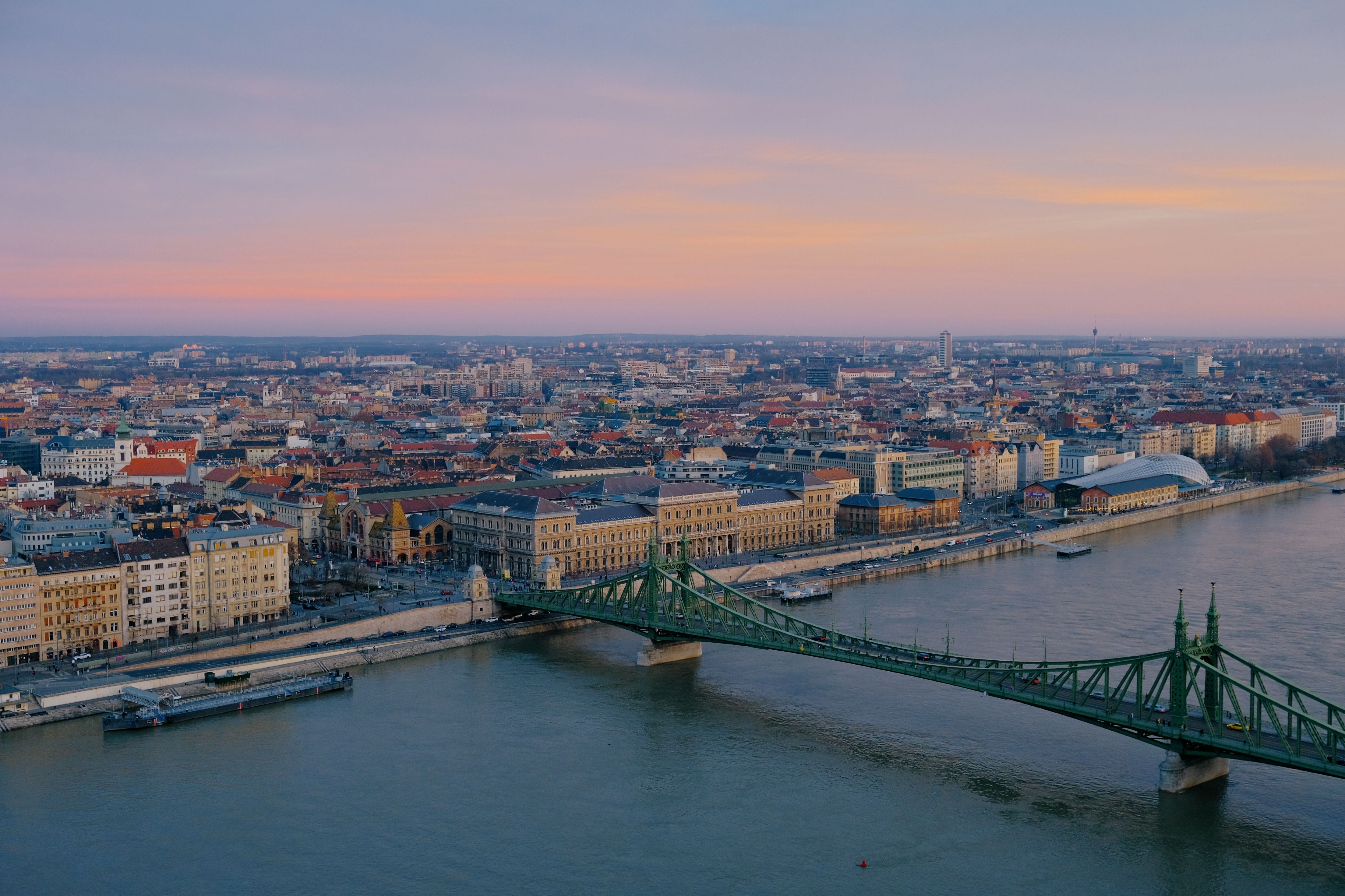
In the coming months, the key question will be the direction in which the economic and regulatory environment evolves. As this becomes clearer, the currently cautious buyers and investors are expected to gradually return to the market.
More than two decades of experience show that the Budapest real estate market operates in cycles, and such transitional periods often present genuine opportunities for those with a strong understanding of market dynamics.
Do you think the current situation is more likely to encourage investors to wait, or are the best opportunities in the Budapest real estate market opening up right now?
